
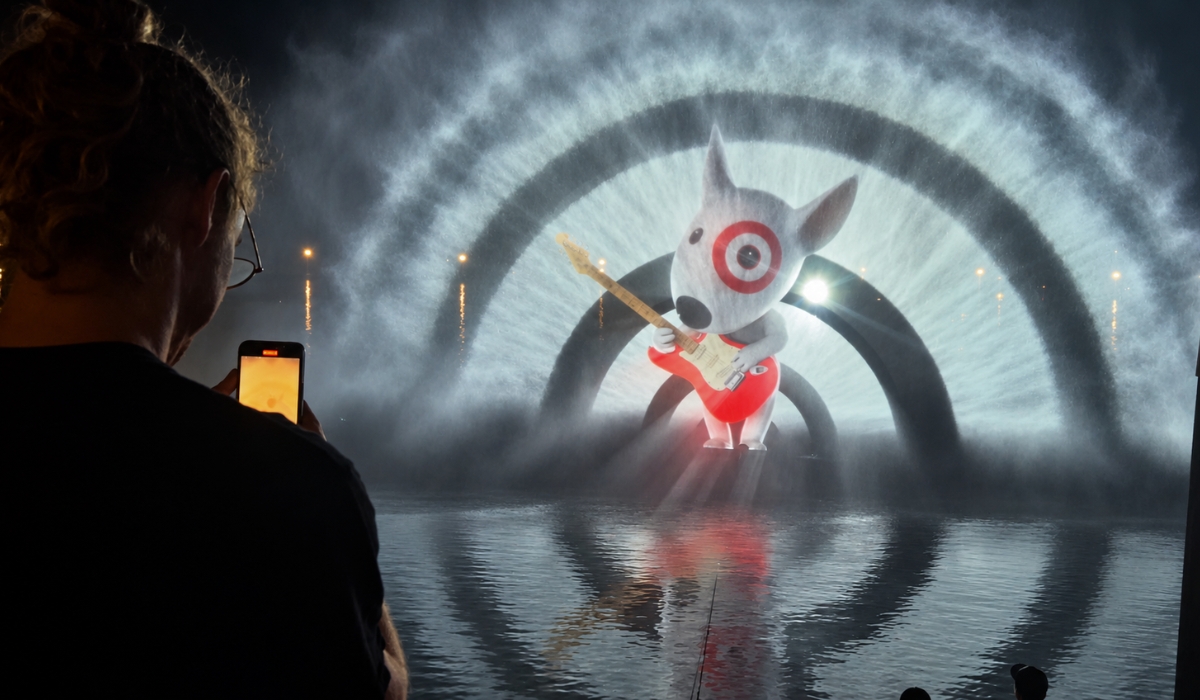
Holograms have fascinated audiences for decades because they create the illusion that 3D animations move and exist freely in a physical space. Before, they were associated mainly with science fiction, but today they are real and are seen more often at live events to entertain and wow audiences. While creative teams have managed to create these illusions with a few tricks using AV technology, the term has gradually expanded to describe several visual techniques that produce transparent or floating imagery, including holographic mesh, reflective displays, or transparent LED. However, can those tricks be transferred to the element of water?
The short answer is yes. Indeed, water screens are among the most dramatic techniques for creating impressive holograms, in which animation or video is projected onto a thin layer of water suspended in the air. However, they come with technical challenges that, if overlooked, can make your hologram fall flat. In this article, we will discuss how you can create a hologram on a water screen and what factors you should consider to make the 3D animation look great.
How Does a Water Screen Create a Hologram?
The first element you need to create the holographic visuals is the water screen itself. This is a high-pressure pump that pushes water through a specialized nozzle, creating a thin surface made from thousands of water droplets. Depending on the system, the water can form a large fan-shaped screen or a vertical curtain. The water creates a mist effect, which will be the projection surface, or in other words, the canvas for your Holograms.
The second element is the projection system. High-output projectors cast video, 3D animation, characters, logos, or other visual content directly onto the droplets, which scatter enough of the projected light for the audience to see the image. The surrounding environment remains partially visible through the areas receiving little or no light, giving the projection its transparent appearance. The physical screen becomes difficult to perceive, while the illuminated elements appear to float in front of the audience.
Technically, the result is a hologram-like projection rather than a true optical hologram, but the visual effect is what live-event audiences commonly recognize as holographic imagery. Additionally, for the attendees, the technical process is mostly invisible because most of the time they only see an animated figure, product, logo, or visual sequence occupying a large area above the water with no obvious physical screen behind it, making the trick.
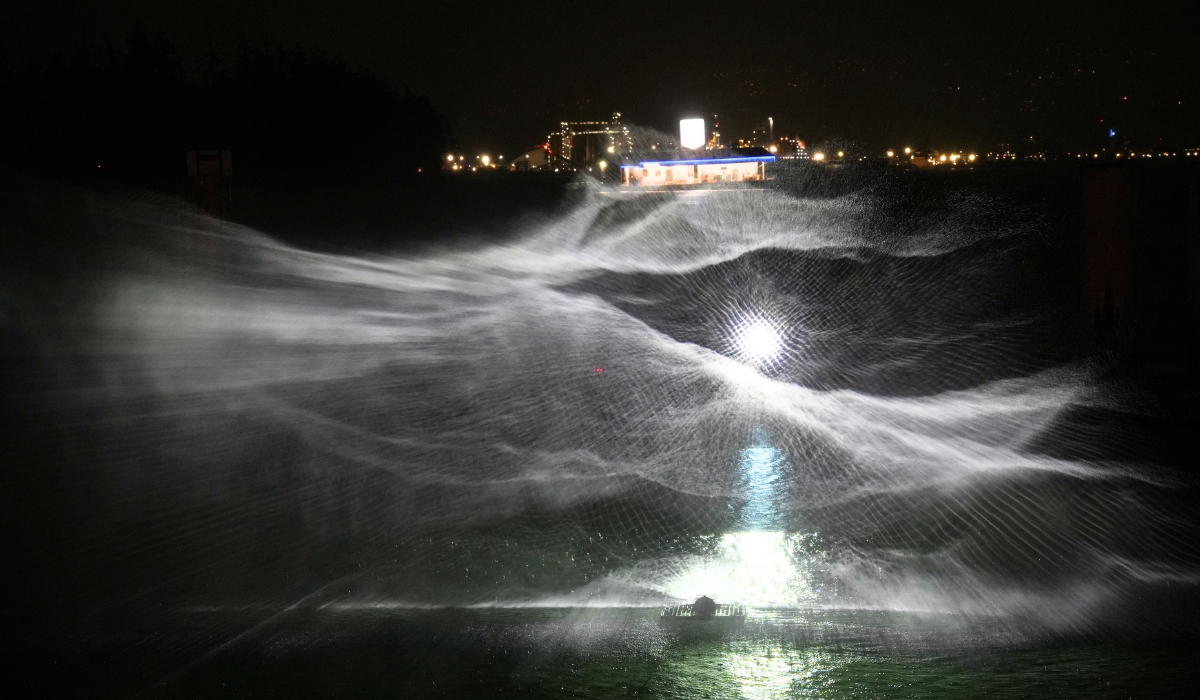
Water Screen System
Control Lighting or Use Nighttime to Create Better Conditions for The Holographic Effect.
The first factor to consider in how your holographic animation will look is the amount of ambient light surrounding the water screen, as it has a direct impact on how clearly the audience sees the projected animation.
As discussed before, projection functions by sending light toward a surface, so sunlight, architectural lighting, stage lighting, signage, and other bright sources compete with the light coming from the projector. On a translucent surface such as water mist, that competition becomes particularly important because the screen already reflects less light toward the audience than a conventional solid projection surface.
For this reason, large outdoor water-screen shows are usually designed for nighttime viewing. Darkness increases the visible contrast between the projected object and its surroundings while helping the physical water surface disappear into the environment. This means that an animated character surrounded by black content can therefore appear to emerge directly from the darkness, bringing a wow factor. To sum up, water-screen manufacturers similarly specify controlled lighting conditions for hologram-like projection, and technical literature on water-mist displays identifies low ambient light and high projector output as important conditions for image quality.
A daytime water screen can still operate as a scenic water feature, but creating a convincing projected holographic image in direct daylight becomes considerably more difficult. Increasing projector output helps, although brightness alone cannot remove the effect of sunlight hitting the water. For a brand planning a large outdoor activation, the show time should therefore be part of the creative and technical discussion from the beginning.
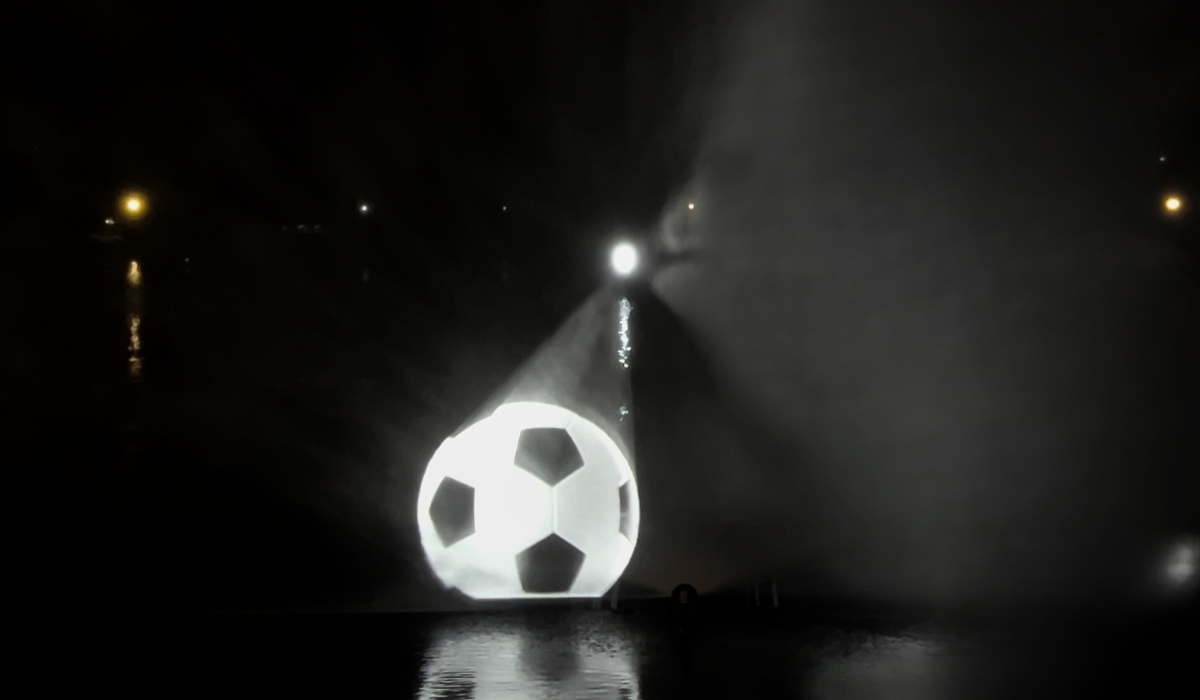
Waters Screen Projection Displaying a Soccer Ball for MLS All-Star Weekend
Outdoor Water Screens Need a Plan for Wind and Bad Weather
This factor is very important to consider and could ruin the multimedia show if overlooked. Because mist creates the projection surface, anything that changes the water’s movement will also change the projected animation. Wind can push mist and droplets away from their intended position, change the density of different parts of the screen, and reduce the usable projection area. That movement can become visible inside the projected image, distorting it.
If the water screen jets and pumps are not calibrated for wind conditions, a character’s silhouette may lose definition on one side, a graphic may appear less bright where water density changes, or part of the image may shift as wind pushes the screen from its original position. The technical team therefore needs to consider prevailing wind direction, screen orientation, projector position, audience location, and expected weather conditions before finalizing the installation. A waterfront site with open exposure requires a different approach from a protected outdoor plaza.
Weather planning also needs to account for the equipment supporting the show. Projectors, media servers, electrical distribution, audio systems, pumps, and control equipment all need an operating plan appropriate for the outdoor environment, while the production team needs clear thresholds for modifying, delaying, or stopping the show if conditions make the water surface unstable or create operational concerns.
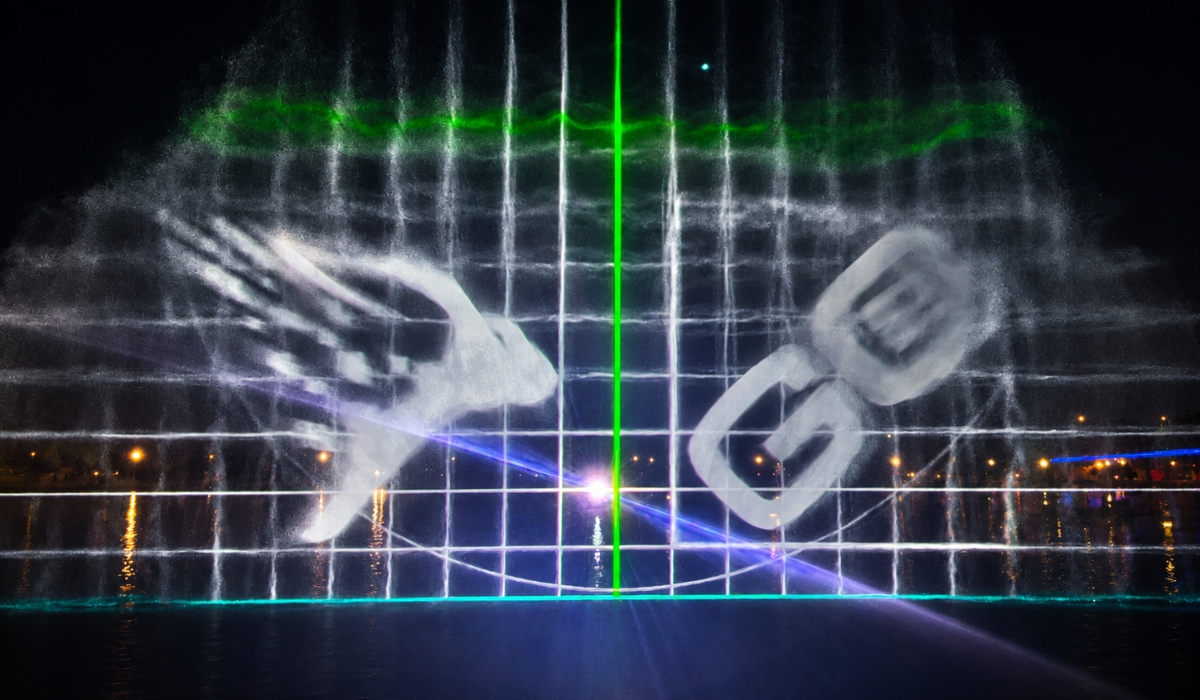
Go2 Productions & Rabcup – Setting up Water Screen Projection
Indoor vs Outdoor Water Screens.
Water-screen projection is not limited to outdoor environments. Curtain-style systems can be installed indoors and suspended from a ceiling structure or truss, creating a rectangular transparent surface that works for exhibitions, brand activations, entrances, stages, and architectural installations. These systems use rows of precision nozzles to maintain a controlled sheet of falling water, and the environment provides greater control over wind and ambient lighting than a large open-air site.
Large outdoor systems operate at a completely different scale. Spray water screens can form projection surfaces tens of metres across and can be installed on floating structures in lakes, harbours, pools, or other bodies of water. The creative team should therefore understand which type of water screen will be used before producing the final animation.
Contrast Is Essential When Designing the 3D Animation.
Now we move from the hardware to the digital assets. It is very important to consider how the content that will be displayed as a hologram is going to be created. Holographic animations on water screens depend heavily on how the animation uses light and empty space. The transparent quality of the screen is most useful when the content isolates the object the audience is supposed to see. A 3D character placed against a black background, for example, receives projected light across the visible character while the dark areas surrounding it contribute very little light to the water. The audience sees the character floating inside the environment without a bright rectangular frame revealing the boundaries of the projection.
This makes contrast an important creative decision. Bright characters, illuminated edges, particles, energy effects, flames, glowing objects, and saturated visual elements maintain a clear presence against the dark surroundings. Fine grey details, subtle shadows, low-contrast textures, and small graphical information can become difficult to read once the image is projected across moving droplets and viewed from a considerable distance.
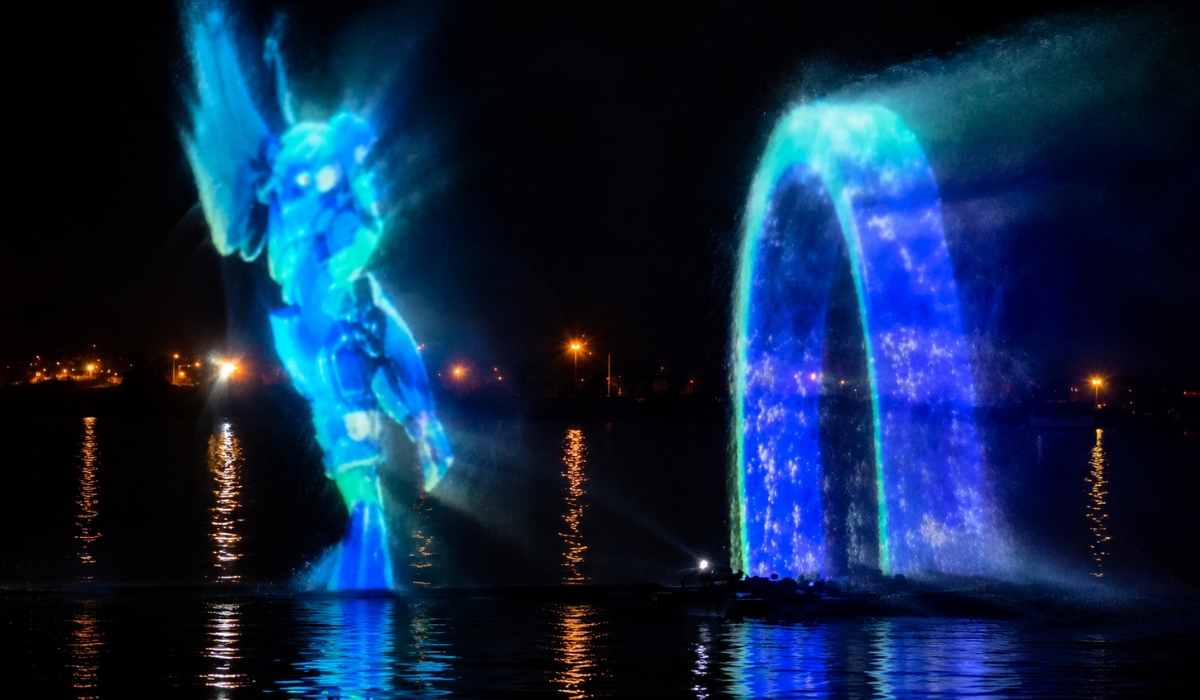
AT&T Brand Activation – Water Screen Multimedia Show
Screen Size and Viewing Distance Change the Animation
The next factor to consider is the dimensions of the water screen. This determines how large the projected objects become and how far away the audience needs to stand to see the complete composition. For example, an animation produced for a small mist screen can contain details that, in contrast, would disappear across a surface measuring more than 100 feet. Characters, products, text, logos, and important visual actions need enough scale to remain legible from the actual viewing area.
Additionally, the animation’s shape must account for how the mist spreads across the screen. For example, if a spray screen has higher density in certain areas and softer edges where the water disperses, then the most important characters and objects should be placed in the center to obtain the best visual results. Large movements, recognizable silhouettes, and intentional positioning generally convey messages more effectively than a composition cluttered with small details that compete for the audience’s attention.
Real Case Studies:
Now that we have discussed how you can project holograms on water screens and presented key factors to get the best results, let’s now dive into two real examples Go2 Productions produced for big brand activations.
AT&T at TwitchCon: Creating the Animation for a 120-Foot Water Screen
In 2022, Go2 Productions worked with Wasserman to create a holographic water-screen experience for AT&T during TwitchCon in San Diego. The production used a 120-foot-wide pressurized water screen installed in the harbour, creating a canvas large enough for people attending the event and visitors walking along the harbour boardwalk to watch the animation from shore. Go2 had only three weeks to design and produce the experience, which included a detailed animated character and a complete multimedia sequence.
The scale and production schedule influenced how the animation was created. Go2 used motion capture to record the character performance, spending one day rehearsing and another capturing the movement before cleaning the data and moving into animation production. The team then developed texturing, lighting, optical effects, and additional effects while producing music, dialogue, and sound effects alongside the visual work. Two 32K laser projectors delivered the final imagery onto the water, creating the saturated floating effect seen from the boardwalk.
This project demonstrates why the animation and technical design need to develop together. The character needed to read clearly at a very large scale, the visual effects needed enough contrast to survive the transparent projection surface, and the projection system needed enough output for the harbour environment. The final holographic effect came from the combination of the water screen, 3D animation, audio, projection, scale, and nighttime setting.
MLS All-Star Weekend: Expanding the Hologram to 120 × 90 Feet
Following the TwitchCon activation, Go2 Productions worked with Wasserman again to create a water-screen projection for MLS All-Star Weekend 2023 in Washington, DC. The new installation expanded the holographic canvas to 120 feet wide by 90 feet high, giving the creative team an enormous transparent surface for content connected to sport, music, and art. Go2 handled technical design, project management, creative direction, content production, and 3D character animation, while US-based technical partner Rabcup supported technical production.
Two 25K projectors were positioned approximately 300 feet away to produce the final image. Those dimensions change the way an animation needs to communicate: a 90-foot-high character or graphical element becomes part of the surrounding environment, while subtle visual detail becomes far less important than silhouette, movement, scale, and colour. The water screen also remained transparent around the illuminated content, allowing the animation to appear within the open physical space rather than inside a visible rectangular display.
For a brand activation, that scale creates possibilities that are difficult to reproduce with conventional event screens. A product, mascot, athlete, fictional character, or branded visual sequence can occupy a large area above a waterfront or open event environment and become part of a scheduled multimedia show. The content still needs to be designed specifically for the water surface, because the physical characteristics of the screen determine how convincing that floating image ultimately appears.
Final Thoughts
So, can you project a hologram on a water screen? Yes. A pressurized water system creates a transparent surface of droplets, and high-output projectors cast custom animation onto it, making illuminated characters and objects appear to float in the physical environment.
The water screen can display video, 3D animation, logos, characters, products, abstract visual effects, and complete narrative sequences. The most effective creative concepts use transparency deliberately, giving individual elements enough separation from the background to preserve the holographic illusion that they exist independently in physical space.
The quality of the effect depends on the complete setup: ambient light, screen type, projector output, outdoor conditions, viewing distance, water stability, and the visual decisions made during animation production.
Nighttime conditions usually provide better contrast for large outdoor shows, while wind can change the shape and density of the water screen itself. Indoor installations offer greater environmental control but require a water-screen system designed for that setting.
Contact Go2 Productions to discuss how a holographic water-screen experience could be developed for your next brand activation, product launch, sporting event, or multimedia show.